


This post may contain affiliate links and we may earn compensation when you click on the links at no additional cost to you.
How do we raise apologetic children? How do we avoid raising kids who just say, “sorry…” out of obligation and raise children who truly want to fix their ways?
I have heard a lot of moms say, “Well, I don’t make my kid apologize.” Some people might be immediately going into terror mode and thinking, “Why would you NOT??” But hold on, the reasons I’ve heard are not that crazy…
There are three main reasons that I have heard for not forcing an apology out of your child.
1. It teaches them to be insincere by having them say they are sorry when they are not.
2. It can cause kids to think that saying “sorry” is a pass and that their misdeeds should just be erased.
3. Making them apologize does nothing to actually change the behavior. All three of these reasons are very legitimate. So how do we raise apologetic children without running into these pitfalls?
How to Raise Apologetic Children
Let’s start with the basics: simply telling your child to apologize. I know, I know… This can cause the issues discussed before. I agree… IF this is the only step you take to raise apologetic children. This should not be your only strategy, because as said by those moms, it can cause some issues.
But demonstrating to our children the importance of our words is necessary. Children start to see that using apologetic language can start the process of healing hurts between friends. Our words have power. We maybe didn’t mean it when we started saying it, but often after you verbalize an apology you start to realize how wrong you were and start to feel it.
Having words to say is also a little more concrete for little ones. It’s hard to teach a feeling but if our kids can start to learn the words first it can help them learn the concept.
As said again, this should NOT be just a forced “say you’re sorry!” Some strategies should be employed to avoid raising kids who use “sorry” to avoid getting in trouble.
Do not use an apology as a means to get out of a negative consequence.
As a teacher, I come across children often who will be rude or misbehave then say sorry expecting zero consequences. They will hit, scream at teachers, etc then come up to me 5 seconds later with an apathetic, “sorry” or even “I’m sorry for disrespecting you.”
I always respond with, “I’m glad that you came to apologize, but what can we do to make sure this doesn’t happen again?” or “I appreciate you apologizing, what is going to happen next time something doesn’t go our way?” Very often the kid immediately throws a fit (again) because I didn’t say, “It’s okay…” then remove their consequence. Were they really apologetic? Absolutely not. Those were just words.
This means that too often these children have done whatever they wanted, said sorry, then had all consequences removed. They now see “sorry” as a get out of jail free card that they can pull out whenever they’re in trouble.
This, as said before, can be caused by simply telling our kids to “say you’re sorry” without actually talking about what an apology means. They probably have had to apologize as a punishment replacer.
Demonstrate!
You will see this on EVERY ONE of my posts about how to teach your child something. The best way to teach our children is to demonstrate. You want your child to appreciate reading more? Make sure they see you reading every day, and let them hear you talking about your favorite books. Want them to be grateful? Make sure you are showing thankfulness and talking about your blessings!
It’s the same with being apologetic. When you make a mistake, own up to it, and apologize. Allow your children to see that making a mistake is human and there is no shame in apologizing.
Especially make sure to apologize for accidents. When we accidentally smack someone in the face, it still hurts. Apologies are not just for intentional acts.
Show them that apologizing is not a punishment and can be nice for the person we are apologizing to and nice to us! We feel better after talking to someone about what happened. When we apologize it helps us lose our anger and resentment.
Timing is Important!
When and how we talk to our kids about apologizing and have them apologize makes a big difference.
If you have read about mindfulness or about behavior in children, you probably already know about the different parts of the brain that control our behavior. When we are upset or angry we start to go into our more primitive part of the brain. Children have a very hard time getting out of this part of their brain. While your child is throwing that temper tantrum, they are still in the reaction part of their brain. They cannot and will not hear reason.
Trying to have our children apologize while the emotions are still raw of their actions is a bad idea. This is where the insincerity will start to happen. It doesn’t matter if you force them to say they are sorry. They AREN’T sorry. They won’t be able to feel sorry until they have had time to return to their higher brain functions.
I do not expect my kid to even feel bad for his actions until after a timeout. After the child has calmed down and distanced themselves from the situation, you can talk to them about how what they did made you or their friend or sibling feel. Only after they can feel empathy and want the other person to feel better will they feel apologetic.
That is when you discuss apologizing and using words like “I’m sorry” to show someone that you feel bad.
It’s also okay to tell them that they might not immediately get forgiven. If you are dealing with multiple little ones who are learning how to control emotions and get out of their reaction brain then it might take some time for forgiveness too… Which is a whole other lesson!
Read Books!
If you are a follower of Purposeful Mommy, you know that books are my favorite way to teach ANYTHING! Life skills, character traits, math concepts… everything can be taught through a good read-aloud.
To see how I use books to teach character traits, check out my other post here where I demonstrate using Bryony Supper’s The Inventing Tubes to teach patience.
The Sorry Sticks

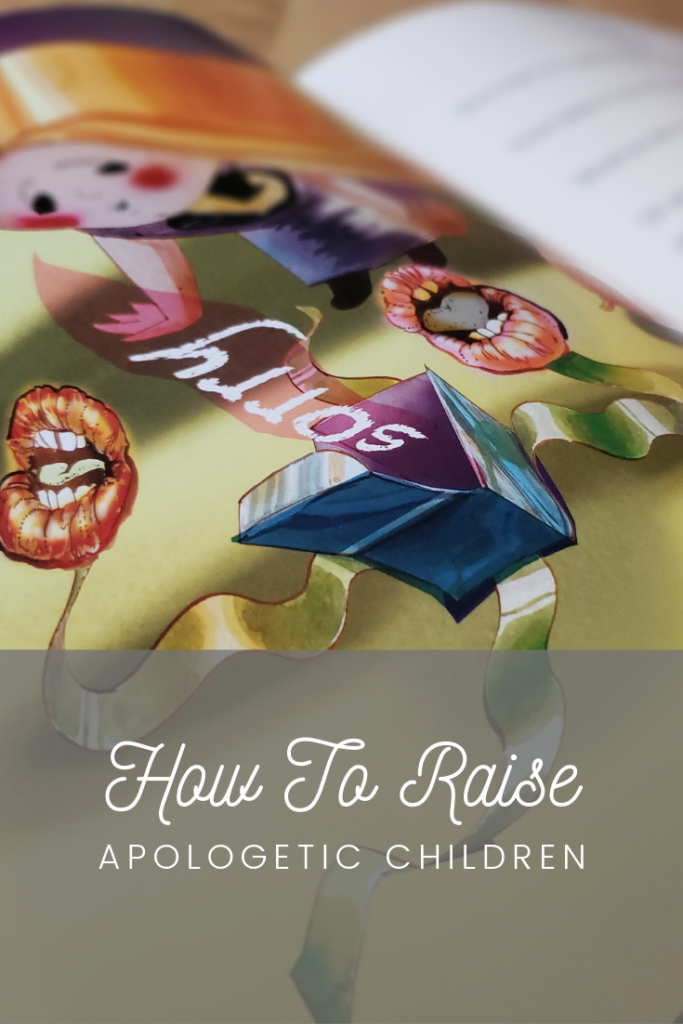
Bryony Supper’s books are great for teaching important character traits and manners. After writing about the Inventing Tubes, Bryony Supper gave me a copy of her second book! The Sorry Sticks is her second book in the “Pasta Kidz & Pasta Petz Adventures” and teaches that apologizing can be fun!
This cute story is about how Victor Vermicelli and Val the Vermicelli snake get a big ticket for speeding in a “No Snake Lane.” The big ticket says that they must show that they are sorry. The two give a sorry parade to show they are sorry and learn how fun it can be to apologize.
After reading this book with your child, you can talk about ways of showing that you are sorry. Talk about which ways would be more meaningful to the recipient and how apologizing can make us feel.

When using a read-aloud to teach your child, it’s important to DISCUSS and plan some talking points. Read my other post to see how to plan for these read-alouds!
Fill a Bucket
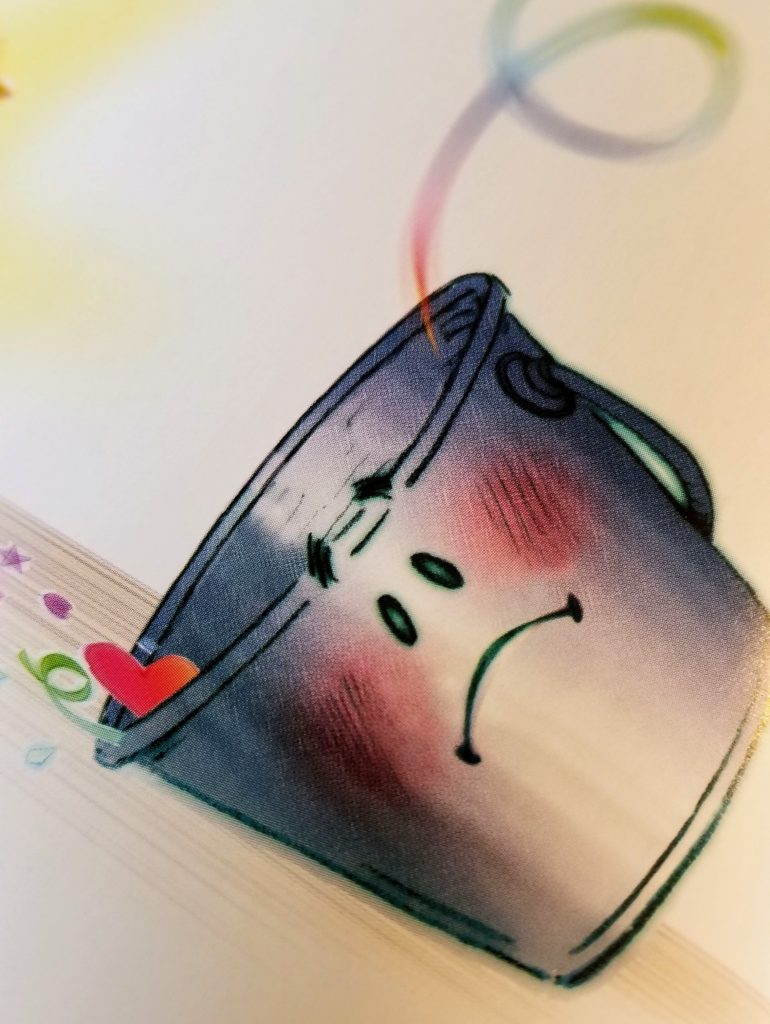
Fill a Bucket by Carol McCloud and Katherine Martin, M.A. is actually part of a series of books specifically written to teach children about using kind words. I was actually introduced to these books as a teacher. We were each given a copy of Fill a Bucket and Have You Filled a Bucket Today? We were expected to use them in our community building lessons at the beginning of the year and use the language and ideas throughout the year (Ex. “Johnny, it really filled my bucket when you drew that picture for me!”)


Although not specifically focused on apologizing, I feel like the idea of bucket filling goes right along with it. Schools use them in the classroom, but they are great to read with your kids at home as well. If the concept of bucket filling and dipping is spoken about a lot in your home, then you can use it to talk about how being mean (or whatever they did) dipped the other person’s bucket. How can we help fill it back up? Apologizing is a great way to help refill a person’s bucket!
These books are really great to help give a visual to children for how using kind words affects people. It also gives you good language to use that immediately brings understanding when a situation is occurring.
Flip Flap Flop

This was a book that I found in my personal library that I really have no clue where it came from. It could have been from when I was a kid, it could have been donated to me when I was first a teacher (my classroom library is now my kids’ library at home). Flip Flap Flop is an older book by Stephanie St. Pierre. It doesn’t actually look like it is still in print but I found it on Amazon HERE.
The book is written as a book about self-esteem but I felt like it demonstrated the importance of apologizing really well. Kermit’s feelings are hurt by his friends and it causes him to start to feel very bad about himself. This is perfect to show that even if our intentions were not to hurt someone, our words or actions can do a lot of damage, which brings us to why admitting our mistakes and apologizing is so important.
Choosing Books to Teach About Apologizing
Don’t think that a book has to have “Sorry” in the title to be great for teaching about apologizing. Two of the books I used were not written specifically to teach about apologizing. Find books that teach about using kind words or about someone getting their feelings hurt. There will almost always be a part where the characters apologize and try to make the person feel better.
What Do You Think?
What are your favorite ways to raise apologetic children? Are there any books, stories, or movies that you use to reinforce the idea to your kids?
Share with us!




I love this post! This is such an important skill to have and I know so many adults that don’t know how to apologize or understand the importance. Thank you so much for sharing these great tips!
Oh my goodness, yes! Never force an apology. I love that! I never have my kids say sorry, but we do talk about why their actions were hurtful. Usually, after that they apologize on their own. I think a lot of parents forget that kids have to develop empathy and their impulsiveness often causes them to act without thinking. By modeling apologies, even when we didn’t mean to hurt someone, our kids will pick up on that.
I love that you always use books to teach your children life concepts! These are all great books, especially “Have you filled a bucket today?” I love that you not only covered how to say sorry and how it feels when someone is unkind with your book examples, you also included what children should be focusing on too: building others up!
This is a really great post! I always explain to my son WHY he needs to say sorry…how he made someone feel or what it was that he did wrong. It’s so important to explain it and lead by example! Thanks for this info mama, you rock!
[…] How to Raise Apologetic Children […]
This is a really greta post and very important. I love the book suggestions and want to get these for my toddler to help continue to raise her apologetically 🙂
[…] your home. Here are some of the ways you can make a cute little snug in your house to keep everyone relaxed and […]
[…] How to Raise Apologetic Children […]